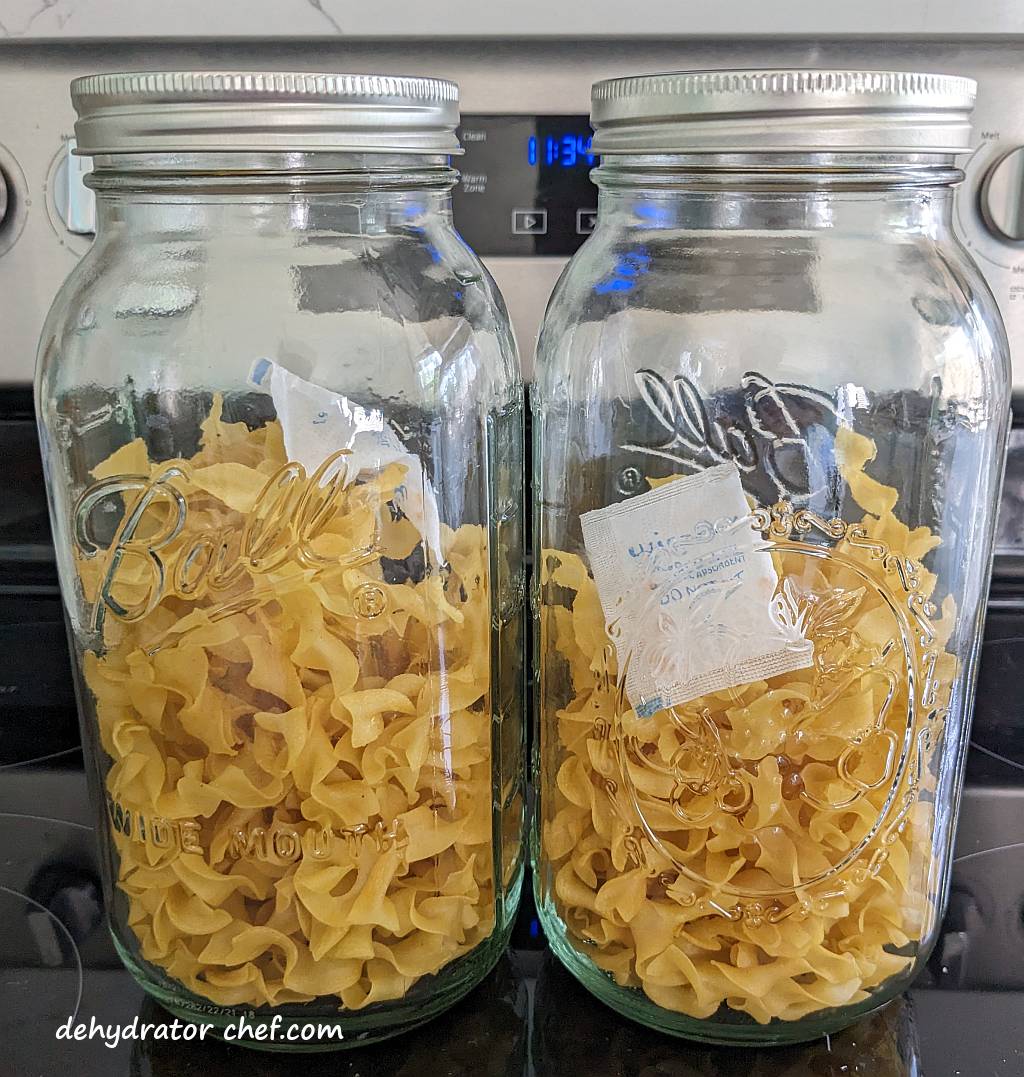
How to Dehydrate Noodles
This is our step-by-step guide on how to dehydrate egg noodles. Dehydrating noodles is real easy to do. Just like in our everyday cooking, many of our dehydrated camping meal recipes use it. So it just makes good sense to dehydrate what you use day-to-day and have it on hand in your pantry for when it’s needed.
Equipment
- Removable mesh screen insert (one for each dehydrator tray)
- Common kitchen tools (including cutting boards, chef's knife, colander, etc.)
- Canning jars with tight-fitting lids
- Desiccant packets for moisture control (optional)
Ingredients
- several packages egg noodles
Instructions
Process the Noodles
- Cook the egg noodles according to the package directions. Omit any added fats or oils.several packages egg noodles
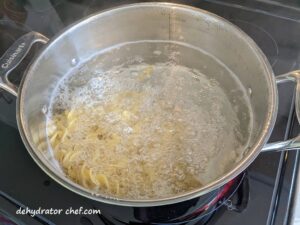
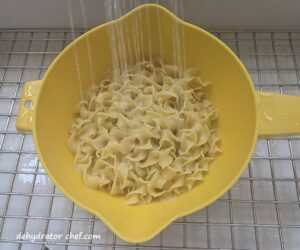
- Drain the cooked egg noodles.
Prepare the Dehydrator
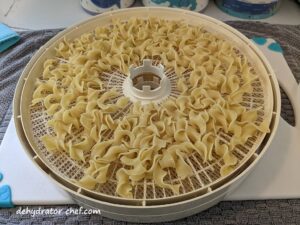
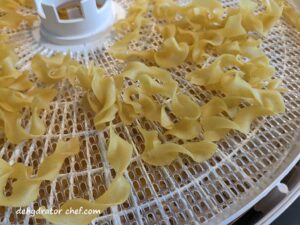
- Layer the cooked noodles onto the removable mesh screen inserts; one 12-ounce package will fill 7 to 8 of the Nesco 13.5-inch round dehydrator trays.
Dehydrate the Noodles
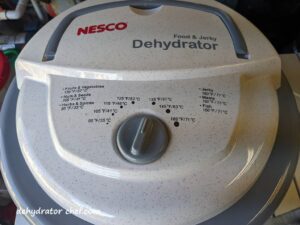
- Set the dehydrator thermostat temperature to 135 °F (57 °C). Dry for 8 to 12 hours until done.
When is the Noodles Done
- The dehydrated egg noodles easily break apart into individual pieces when done. There should be no wet or mushy pieces.
Equalizing and Conditioning Dehydrated Noodles
- After a short cooling period, loosely pack the dehydrated egg noodles into a clean, dry canning jar with a tight-fitting lid, leaving some headspace.
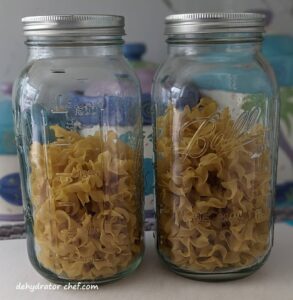
- Every day, for 7 to 10 days, check the jar for moisture. Roll the jar contents around and note any clumping or sticking. If seen, put it all back on the dehydrator for several more hours.
- If you notice any mold at all, even the slightest bit, throw it all out.
Storing the Dehydrated Noodles
- Use appropriate-sized canning jars for storage. Depending on how well you dehydrate them and your pantry storage conditions, the dehydrated egg noodles pieces should keep for at least 12 months.
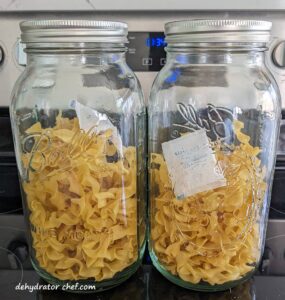
- An optional food-safe desiccant packet will aid with moisture control.
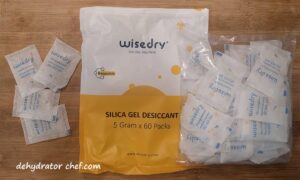
- Attach or include a label describing the jar contents and the date the product was dehydrated. The label identifies the canning jar contents, and the date helps with the rotation schedule. A first-in, first-out rotation helps us to use items that have been on the shelf the longest, so we're using the oldest food first.
Notes
Drying times will vary depending on your dehydrator and environmental conditions. Refer to your dehydrator owner’s manual for recommended temperatures and times for dehydrating specific foods. Remember to use drying times as a guide.
Nutrition
Serving: 50gCalories: 220kcalCarbohydrates: 40gProtein: 8gFat: 2.5gSaturated Fat: 0.5gCholesterol: 60mgSodium: 15mgFiber: 2gSugar: 2g
Nutrition information is only an estimate and may differ depending on the ingredients you use.
Tried this recipe?Let us know how it was!