
Dehydrated black beans and rice are another one of my favorite go-to meals, it’s a universal staple. Whether it’s at the campsite or at home after a long day at work, it’s simple and easily customizable by adding other flavorful pantry staples you might have or something you found at the bottom of the pack. It’s popular because it is cheap and filling.
As ingredients, both beans and rice are easy to dehydrate and store using Dehydrator Chef methods. However, cooking those bags of rice and beans at meal time will take a significant amount of time and fuel. Rice takes about 15 to 20 minutes to cook, and dried beans will take at least 3 or 4 hours on the stovetop without soaking.
So doing all of this prep work now by cooking, dehydrating, and properly storing everything before you actually need to make this recipe just makes darn good sense. Plan ahead, and your future self will thank you.
So let’s get started.
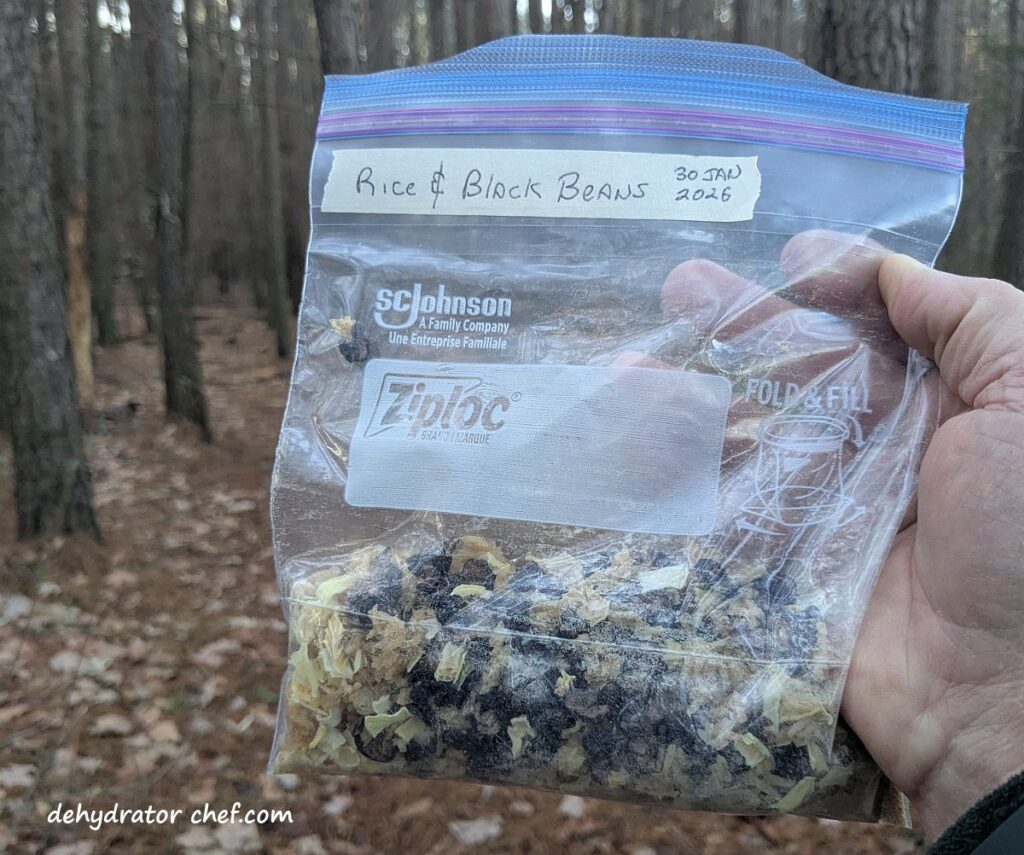
Table of Contents
- Dehydrated Black Beans and Rice Recipe
- Supplies and Tools Needed for Dehydrated Black Beans and Rice
- Dehydrated Black Beans and Rice Dry Ingredients
- Dehydrated Black Beans and Rice Wet Ingredients
- Ingredient Notes
- At-Home Preparation
- Optimize Food Protection for Storage and Travel
- In the Field Preparation
- Alternative Cooking Methods
- Dehydrated Black Beans and Rice Nutrition Information
Dehydrated Black Beans and Rice Recipe
Our black beans and rice recipe uses just a few straightforward ingredients that you can dehydrate yourself. It’s hearty, flavorful, and trail-ready—rehydrating to a satisfying meal in about 30 minutes with our simple three-step process once you get set up at camp.
 | Make Your Own Dehydrated Camping Meals Available only on Amazon.com Step-by-step instructions for 26 homemade trail meals, from hearty dinners to quick breakfasts. Includes exclusive recipes not published on the blog. Grab yourself a copy today. |
Supplies and Tools Needed for Dehydrated Black Beans and Rice
- Several 1-quart zip-top bags
- Heavy-duty paper towels
- Labeling materials such as masking tape and a waterproof all-weather pen
- Small food-safe leak-proof container (optional)
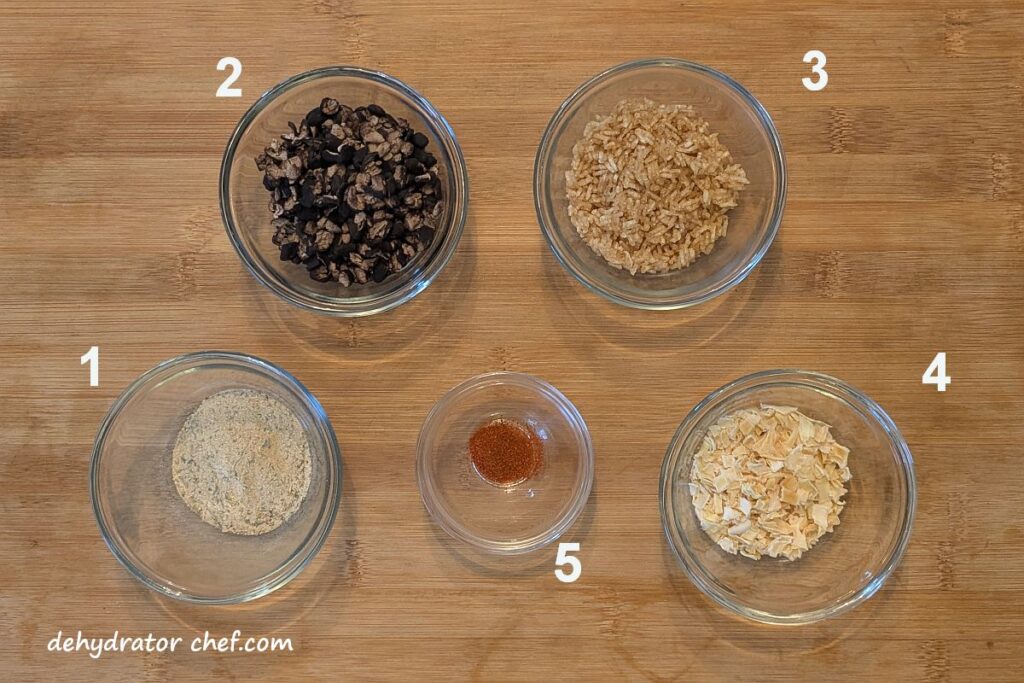
1) Vegetable bouillon
2) Dehydrated black beans
3) Dehydrated white rice
4) Dehydrated onion flakes
5) New Mexico chili powder
Dehydrated Black Beans and Rice Dry Ingredients
This recipe makes one serving, approximately 115 grams of dry mix. Of course, you can adjust the ingredients as you wish.
- 40 grams dehydrated black beans
- 40 grams dehydrated rice
- 10 grams dehydrated onion flakes
- 10 grams vegetable bouillon powder
- 1/8 teaspoon New Mexico chili powder
Dehydrated Black Beans and Rice Wet Ingredients
A quality cooking oil, such as avocado or olive oil, in a leak-proof container (optional)
Add a bit of olive or avocado oil after rehydration and cooking to enhance the flavor.
Ingredient Notes
Most store-bought bouillon cubes or powders contain mainly salt, sugar, and fillers. Many folks will make their own, blending nutritional yeast, mushroom powders, and other herbs and spices. We’re partial to our universal vegetable bouillon recipe.
Feel free to tweak the ingredients and make any adjustments that suit your personal taste.
At-Home Preparation
Combine all the dry ingredients into a food-safe 1-quart quality name-brand zip-top bag for best storage results. The sharp edges of dehydrated ingredients could cause micro-punctures in lesser-quality zip-top plastic bags.
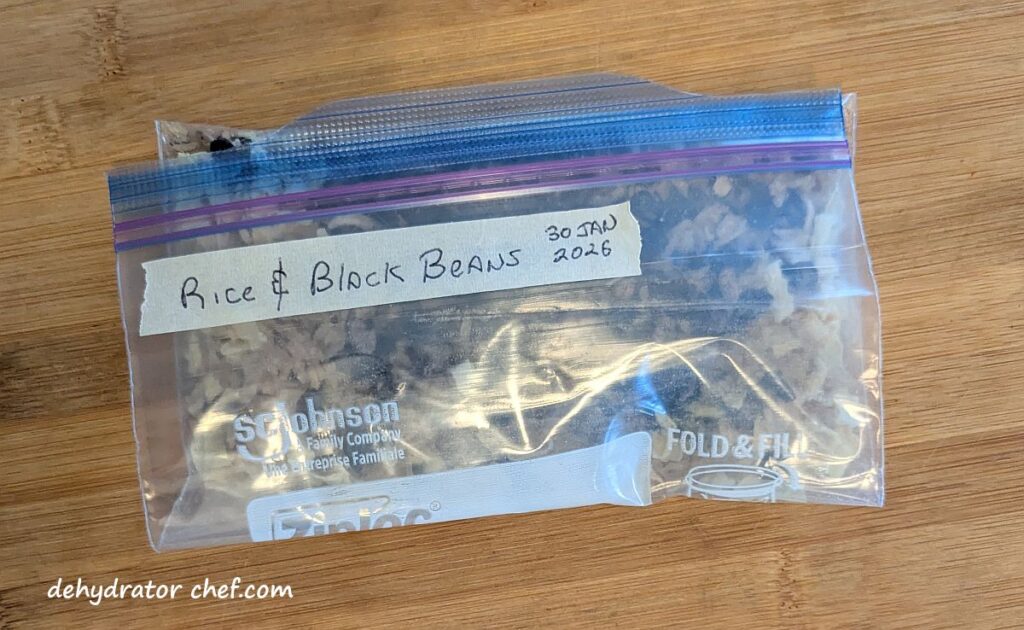
For the optional ingredients, seal the olive or avocado oil in a leak-proof container.
Compared to the local big box stores, Amazon has the best prices for the Ziploc 1-quart zip-top bags. So says the 20,000 plus Amazon customer reviewers who took the time to leave feedback. The rough edges and sharp ends of dehydrated foods very often compromise generic zip-top bags. Quality zip-top bags are a necessity when making dehydrated meals for camping.
Need another reason to buy quality name-brand Ziploc bags? An analysis commissioned by the Mamavation website showed that the majority of plastic sandwich bags sold in the U.S. contain high levels of toxic PFAS, also known as forever chemicals. Ziploc was one brand that contained no detectable levels of forever chemicals.
Be sure to include a short note with the name of the dish and detailed preparation instructions. We have included detailed preparation instructions at the end of this page.
Be sure to include a short note with the name of the dish and detailed preparation instructions. We have included printable and detailed preparation instructions at the end of this page.
Optimize Food Protection for Storage and Travel
Double bagging, using two zip-top bags with a separator, is an option to help guard against punctures, leaks, and water penetration and to protect the food’s integrity. This way, it remains viable in the field or pantry storage.
The Scott Shop towels brand makes an excellent bag separator. These multipurpose paper towels are thicker than the average heavy-duty paper towel. As a multitasker, repurpose these towels for the after-meal cleanup activities.
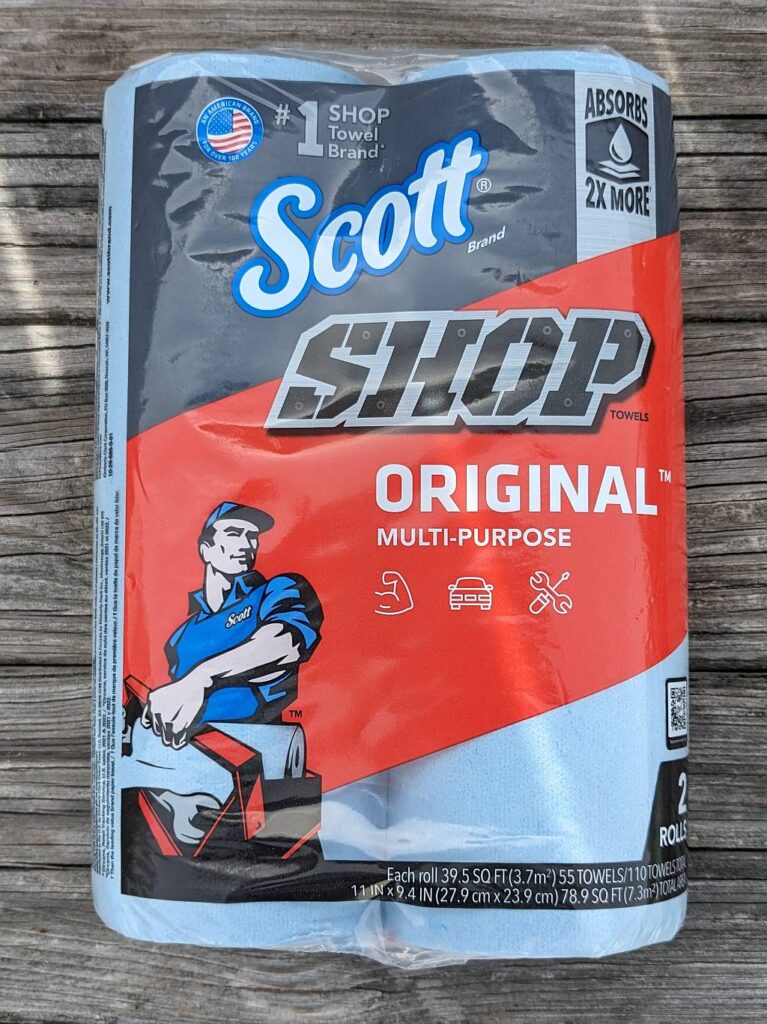
These heavy-duty paper towels have over 11,000 Amazon customer reviews with an average rating of 4.8 out of 5 stars, which is evidence of a great product. You may be able to find them at your local big-box megamart automotive department.
In the Field Preparation
Empty the dry mix contents from the zip-top bag into a suitable-sized cooking pot.
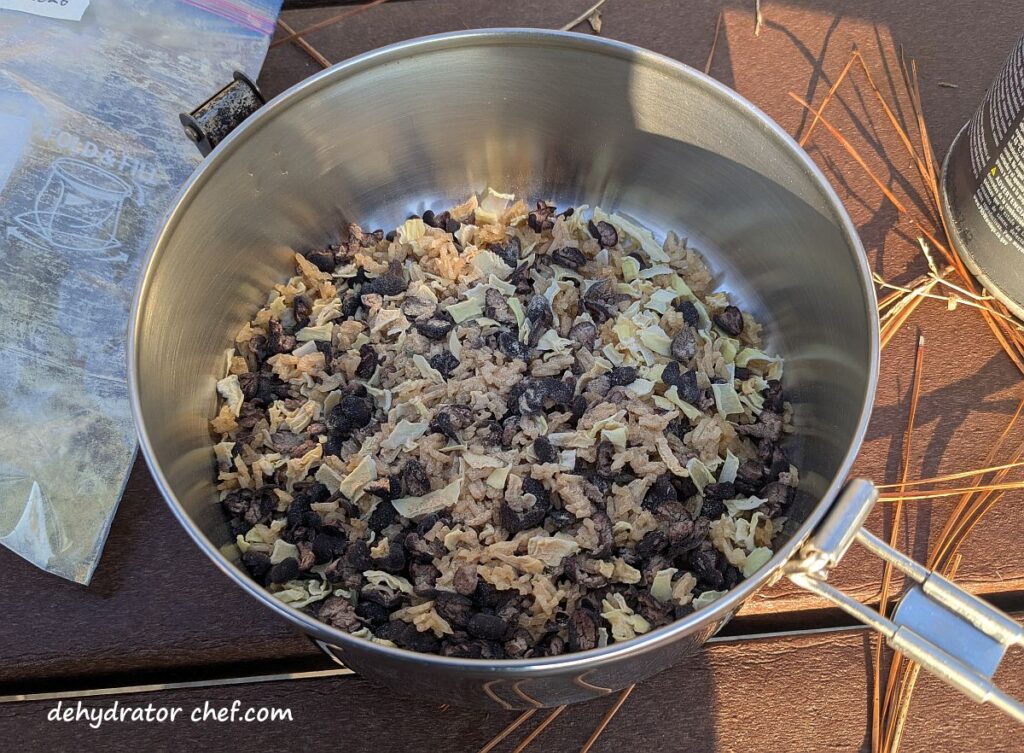
Measure in enough water to cover the dry ingredients. Then add a tad bit more water. Stir to mix thoroughly. Cover and let the dry ingredients hydrate for at least 5 minutes. Stir several times, and add more water if needed to keep all ingredients covered and well-saturated with water.
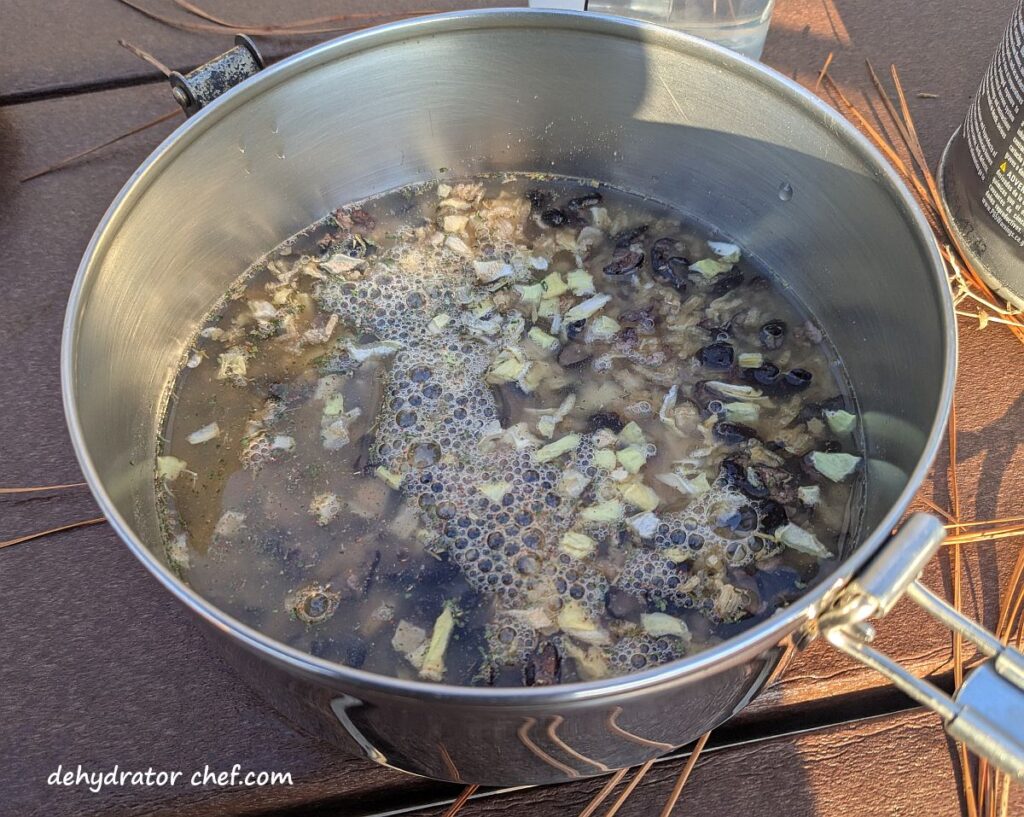
You’ll notice the dry mix starts to soften and rehydrate in the water bath.
So why not add all of the water at once? You certainly can, but we are metering in the water, so we don’t end up with a too-dry or soupy final product. Adding water in smaller amounts works best for our Dehydrator Chef recipes.
Bring the hydrating mix to a boil on your cooking stove, stirring occasionally to mix. Be sure to stir the contents all the way to the bottom of the cooking pot.
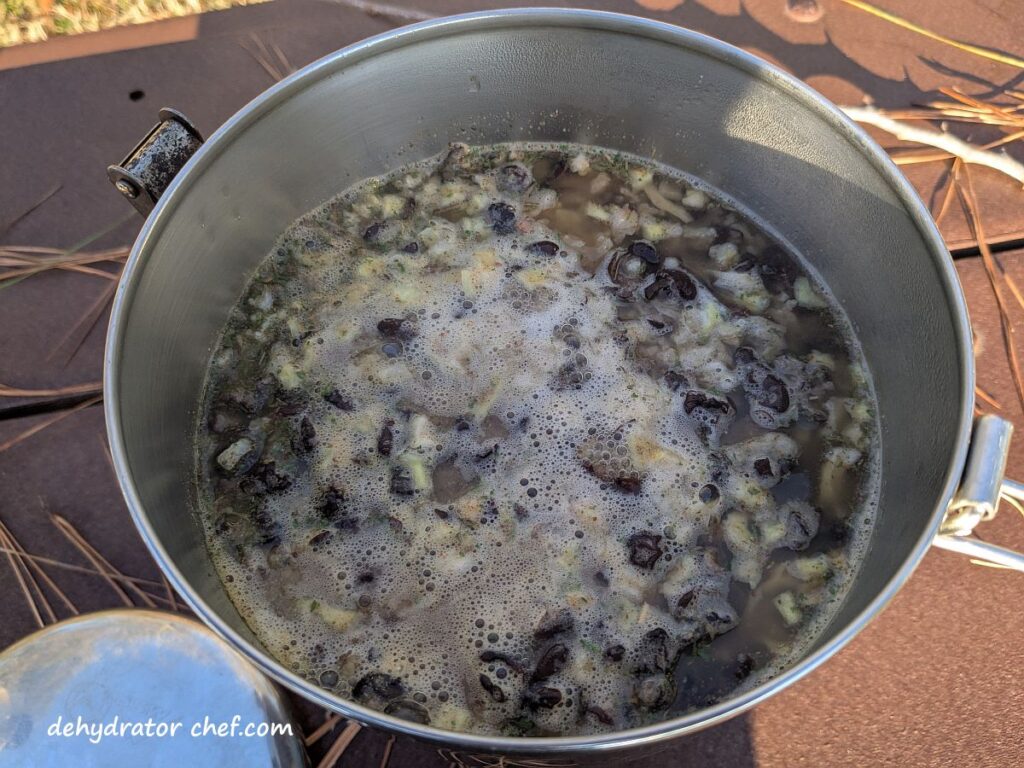
Next, adjust the stove to a low-heat simmer for approximately two minutes. Stir frequently to reduce the chances of burning.
Practice this dehydrated camping meal recipe several times at home before preparing it for the first time out in the field so you know what to expect. Use the very same camp cookware and dinnerware to work through all the how-to unknowns and to adapt where necessary.
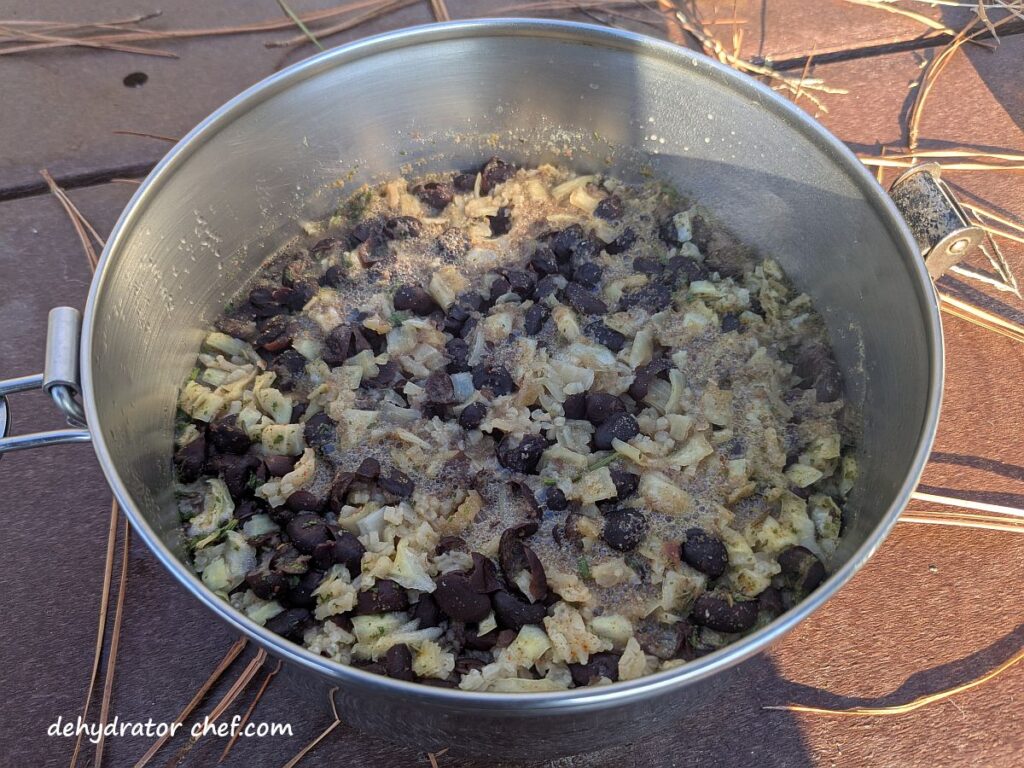
After two minutes of simmering and stirring, turn off the stove and move the pot into an insulated wrap or cozy to rest and hydrate for 15 to 20 minutes or more for the flavors to blend and the ingredients to fully reconstitute.
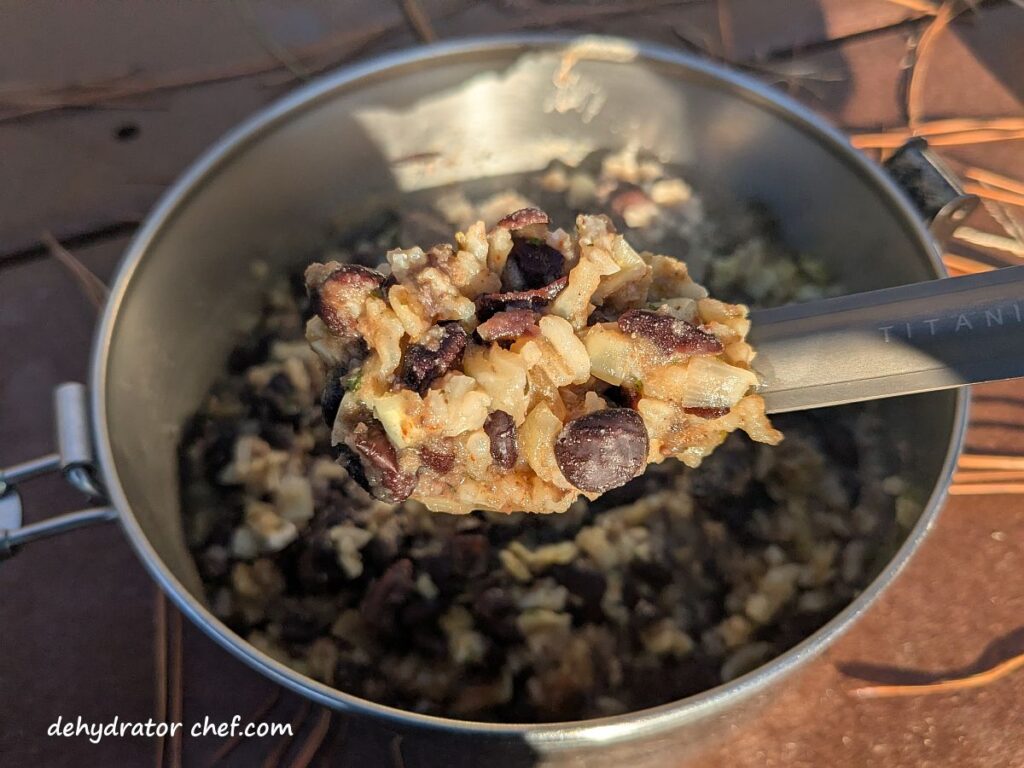
If logistics permit, naan bread is a trail-friendly accompaniment for mopping up or scooping up all of the goods from your cooking pot. Naan bread also makes cleanup easier. Try this recipe at home several times before preparing it for the first time out in the field so you know what to expect.
Alternative Cooking Methods
Other cooking options we have used, besides the trusty cooking pot, include Ziploc freezer bags and Food Saver vacuum-seal bags.
Ziploc freezer bags are inexpensive and made from polyethylene, which has a softening point of about 195 °F (90 °C). You’ll need to let the boiling water cool a tad bit before adding it to the Ziploc bag. Using this method, let the freezer bag meal rehydrate in a cozy to retain heat and help maintain the temperature for at least 30 minutes.
Another option is to use Food Saver-branded vacuum-seal bags. The Food Saver FAQ says that regular FoodSaver bags can withstand boiling temperatures and recommends not exceeding 212 °F (100 °C). You can buy pre-cut bags or just make your own. I don’t vacuum seal the bags closed; I just use them as a cooking vessel. Again, if you’re using this method, let the Food Saver vacuum-seal bag meal rehydrate in a cozy to retain heat and maintain the temperature for at least 30 minutes.
Dehydrated Black Beans and Rice Nutrition Information
Nutrition information is only an estimate. The nutrition information of this recipe may differ depending on the ingredients you use.
Calories: 591kcal | Total Fat: 2g, | Saturated Fat: 0g | Cholesterol: 0mg | Sodium: 364mg | Carbohydrate: 117g | Dietary Fiber: 16g | Sugar: 5 g | Protein: 24g
Dehydrated Black Beans and Rice
Equipment
- Labeling materials (masking tape, waterproof all-weather pen)
Ingredients
- 40 grams dehydrated black beans
- 40 grams dehydrated white rice
- 10 grams dehydrated onion
- 10 grams bouillon powder (enough for 1 cup water)
Instructions
At Home Preparation
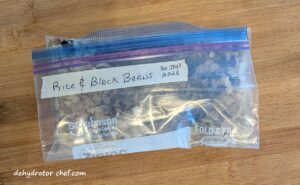
- Add the dry ingredients to a food-safe 1-quart quality name-brand zip-top bag. Label the zip-top bag with the contents and the date.
- Store the leak-proof containers of cooking oil in your cooking pot or with your camp kitchen spices and condiment packets.
Packaging
- Wrap the zip-top bag with a heavy-duty paper towel to help guard against punctures, leaks, and water penetration due to the sharp edges of the dehydrated ingredients and to protect the food's integrity. This way, it remains viable in the field or pantry storage.
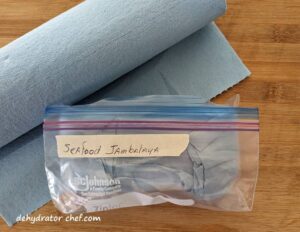
- Add the paper towel wrapped dry mix bag to the last food-safe 1-quart quality name-brand zip-top bag and label it with the contents and the date.
In the Field Preparation
- Empty the dry mix contents of the zip-top bag into a suitable-sized cooking pot.
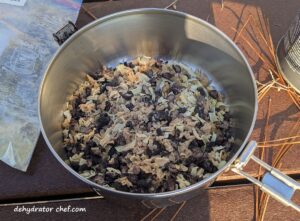
- Add enough water to cover the dry ingredients. Then add a tad bit more water. Stir to mix thoroughly. Cover, and let the dry ingredients hydrate for a minimum of five minutes.
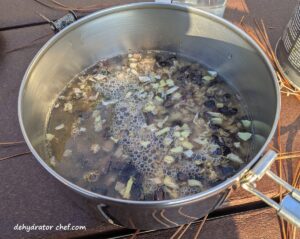
- Next, on your cooking stove and over medium flame, bring the hydrating mix to a boil, frequently stirring to mix. After coming to a boil, turn the flame down to a simmer to reduce the chance of burning.
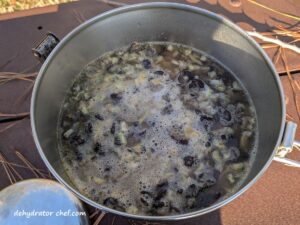
- After two or more minutes of simmering and stirring, turnoff the stove and move the pot into an insulated wrap or cozy to rest, hydrate,and steam for 15 to 20 minutes or more for the flavors to blend and the ingredients to fully reconstitute.
- If desired, add a bit of the healthy cooking oil from the leak-proof container. Stir to combine.
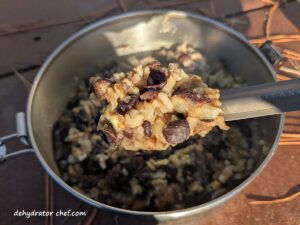
Nutrition
Nutrition information is only an estimate and may differ depending on the ingredients you use.
Dehydrated Black Beans and Rice Detailed Preparation Instructions
Equipment
- camp kitchen equipment (including camping stove, cooking pot, utensils, etc.)
Materials
- 1 serving dehydrated black beans and rice
Instructions
- Empty the dehydrated sausage gravy dry mix contents of the zip-top bag into your cooking pot.
- Pour in enough water to cover the dry mix, then add a tad bit more.
- Cover, and let the dry ingredients hydrate in your camp cookware for at least five minutes. Stir all of the way to the bottom now and again.
- Next, on your cooking stove and over a medium flame, bring the black beans and rice mix to a boil, stirring frequently to prevent burning.
- After bringing the black beans and rice mix to a boil, turn the stove down to a low simmer for two minutes.
- After two or more minutes of simmering and stirring, turn off the stove and move the pot into an insulated wrap or cozy to rest and hydrate for 15 to 20 minutes or more for the flavors to blend and the ingredients to fully reconstitute.